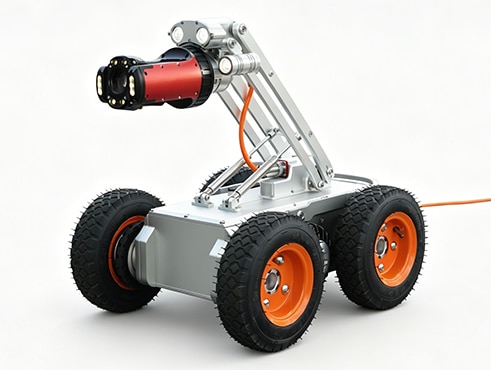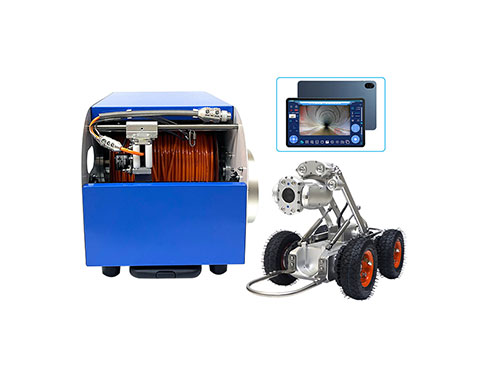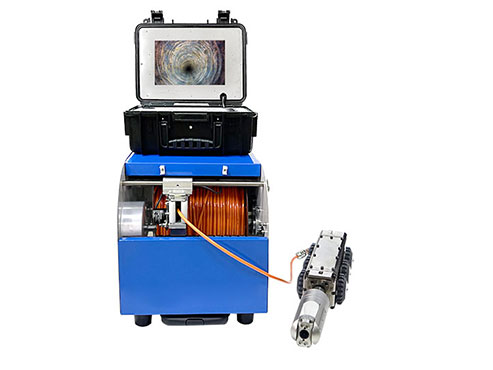
A suitable sewer inspection robot depends on the pipe diameter, pipe distance, water conditions, bends, obstacles, and the type of inspection report.
A compact pipe inspection crawler may work well in a small drainage pipe, while a larger cctv inspection crawler have super power, obstacle and climbing ability in a large sewer. If you need to inspect 100-300m of pipeline, cable length and crawler performance become especially important.
This guide show the main factors to consider when choosing a sewer inspection robot.
What Should You Consider Before Choosing a Sewer Inspection Robot?
Before comparing different cctv crawler systems, collect some pipeline basic information. At least, you should know:
- Pipe diameter(inner diameter)
- Pipe length
- Pipe material and type
- Inspection distance
- Water condition
- Can it be inspect in segments?
- Number of bends
- Possible obstacles or debris
- Required image quality
- Whether you need measurement or reporting functions
These details informations help to know whether you need a compact pipe crawler, a electric lifting camera system, a long-distance pipe inspection crawler, or a cctv inspection robot with high lightness camera and inspection report functions.
1.Pipe Diameter Is the Most Important Factors
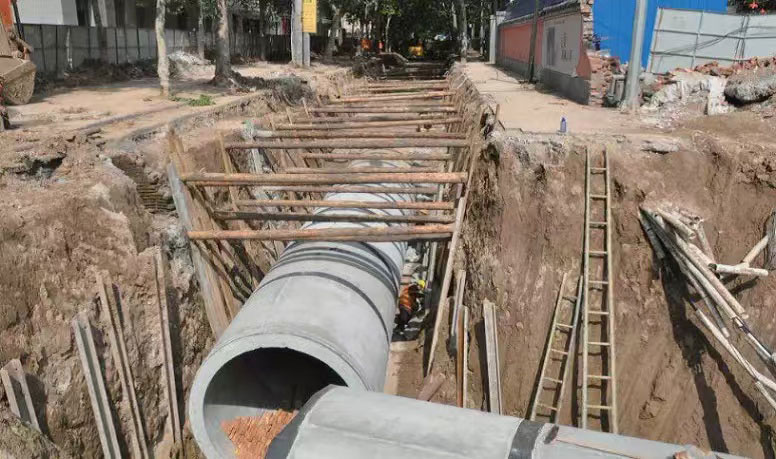
Pipe diameter directly affects the cctv inspection robot's size.
A crawler system access in 150 mm pipe may not provide enough stability in a much larger sewer. On the other hand, a large crawler can't fit small pipe.
So check the minimum and maximum pipe inner diameter before choosing a crawler system.
Small Pipe Inspect
Small drainage and sewer pipes often have limited space. The sewer inspection robot needs a compact structure to move through the pipe.
For these applications, look for:
- Compact crawler dimensions
- Flexible camera positioning
- Good turning ability
- Stable traction
- Hight lightness for narrow spaces
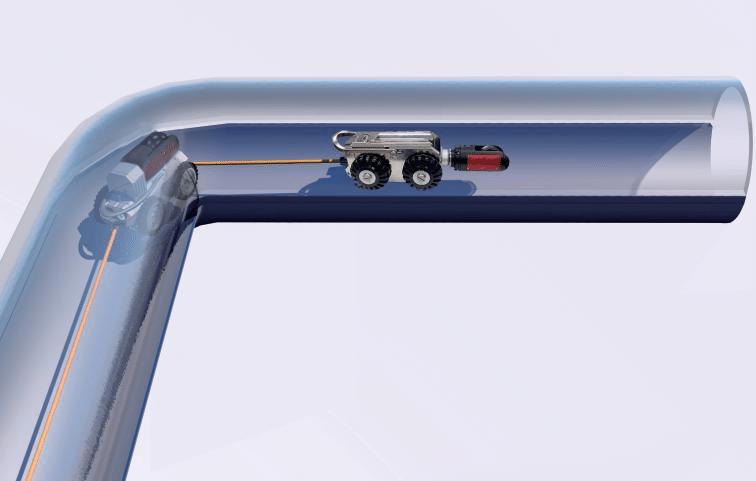
such as the GT105F2 pipe inspection robot can access small pipe. support changeing camera lens and turning in the pipeline.
Medium-Diameter Pipe Inspect
Medium-diameter sewer and drainage pipes provide more space for the cctv crawler, but length maybe not enough, usually the standard cable length is 100m, Maxmium length is 150-200m. A suitable cctv crawler system should provide:
- Stable movement
- Clear images and videos
- 360 degree rotate and 220 degree flip camera
- Sufficient cable length
- Support inspection report system
Large-Diameter Pipe Inspect
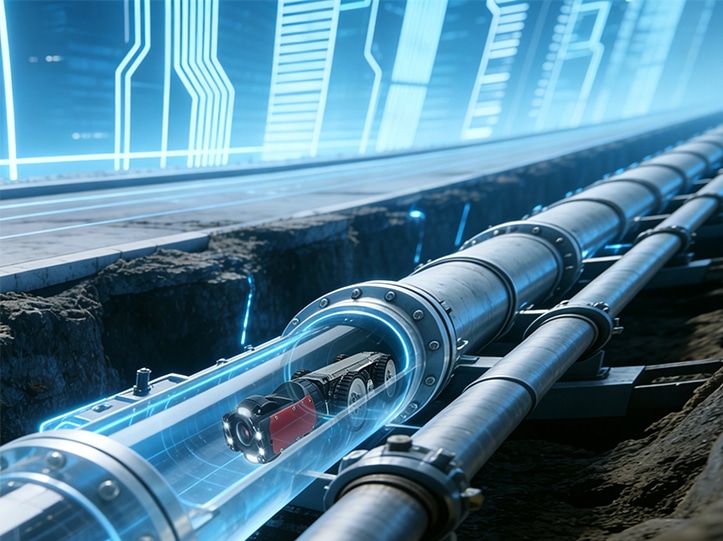
Large pipes, culverts, and utility pipelines require a big pipe inspection robot. The crawler needs super power, traction, obstacle and climbing to maintain stable movement, while the camera should provide a suitable viewing height and HD camera. When choosing a large diameter pipe inspection robot, pay attention to:
- Crawler traction
- Robot size and weight
- Camera lift or positioning
- Lighting coverage Cable length
- Obstacle ability
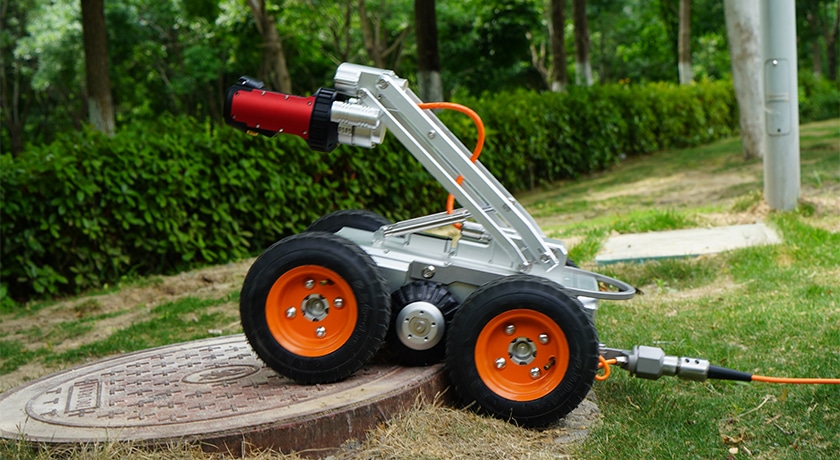
For large pipes, a stable crawler often matters more than simply choosing the highest camera resolution.
2. Inspection Distance Matters More Than You May Expect
The pipe diameter tells you whether the crawler can enter the pipeline. The inspection distance tells you whether it can complete the inspect job. For short inspections, a standard cable configuration(usually 100m or 120m) may be enough. For long-distance inspection, you should consider:
- Cable length
- Electrical reel wire
- Power supply
- Crawler traction
- Communication stability
- Pipeline conditions
- Retrieval and recovery of the robot
- Segmentation inspection(If the inspection can be done in stages, it can save you costs and give you more options.)
If the project requires inspection over several hundred meters, choose a system designed for long-distance operation rather than simply adding a longer cable to a standard crawler. Recently, our new product GT-Veyron long diatance pipe inspection robot can support maxmium 500-2000m cable if you are interested in this model, you can learn more.
3. Will the Pipe Store Water?
Many sewer and drainage inspections take place in wet environments. Some pipelines may store a small amount of water, while other some pipe may remain partially or fully filled during inspection. This changes the requirements for the inspection system. Look for:
- Waterproof level
- Reliable sealing
- Stable crawler traction
- Clear lighting in dark conditions
- Camera performance in wet environments
4. Check the Pipe Structure and Obstacles
Real pipelines rarely look like a perfectly clean straight tube. During an inspection, the robot may encounter:
- Pipe joints
- Bends
- Uneven surfaces
- Deposits
- Sediment
- Debris
- Diameter changes
- Standing water
These conditions can affect crawler movement. If the pipeline contains many bends or obstacles, look for a crawler with good turning ability and enough traction. Camera lens also matters. A pan-and-tilt camera can give the operator a much better view of pipe walls, joints, connections, and defects than a fixed camera.
5. Consider What You Need to See
Camera resolution also is very important, but it should not become the only selection criterion. A useful inspection system should give the operator a clear view of the pipeline and enough information to identify pipe defects, cracks, corrosion, blockage, joint displacement and other issues that may compromise pipe integrity. Depending on the application, you may need:
- HD or 4MP image
- Pan and tilt camera
- Auto zoom
- Adjustable lighting
- Laser measurement
- Image or video recording
- Defect documentation
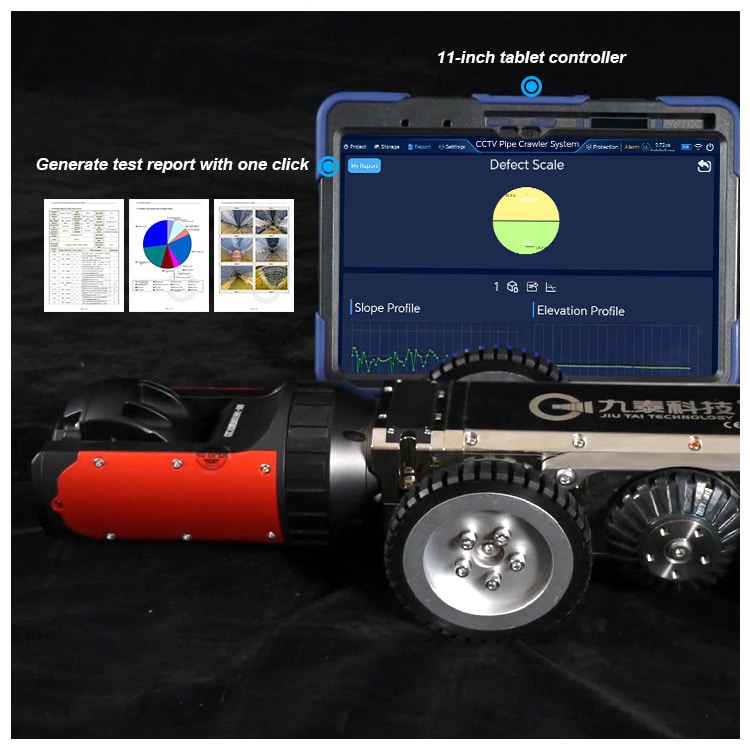
- Inspection reports
For routine sewer inspection, a clear and stable image can often provide more practical value than a higher resolution number on a specification sheet.
6. The Inspection Report
A sewer inspection usually have a maintenance plan not nonly recording video. The inspection team may need to:
- Locate defects
- Record pipe distance
- Identify joints or connections
- Review structural conditions
- Share findings with customers
- Prepare maintenance recommendations
- Keep inspection records
For professional inspection companies, reporting functions can save significant time after the fieldwork. When comparing some different sewer inspection robot, ask not only: “How clear is the camera?” Also ask: “What information can the system help me record and report?” That question often leads to a better equipment choice.
Which Sewer Inspection Robot Is Right for Your Application?
There is no single cctv inspection crawler that works best for all pipeline.
The following table can help you make a quick comparison:
| Inspection Condition | Recommended Robot Type | Key Factors |
| Small-diameter pipe | Compact inspection crawler | Small size, flexibility, turning ability |
| Medium-diameter sewer | Standard CCTV crawler | Stability, HD image, High Lightness |
| Large-diameter sewer | Electric ligting CCTV crawler | Super power, obstacle, climbing ability, Electric lifting camera |
| Long-distance inspection | Long-distance pipe crawler | Long Cable traction, HD pixel |
| Wet or water-filled pipeline | IP68 Waterproof crawler | Sealing, IP protection, traction |
| Detailed visual inspection | PTZ camera | Pan, tilt, zoom, lighting |
| Professional report | CCTV inspection system | Recording, measurement, reporting |
How to Choose the suitable Pipe Inspection Robot
Before send a inquiry, please learn the following information:
- 1. Pipe diameter: Get the minimum and maximum pipe diameter you need to inspect.
- 2. Inspection length: Estimate the inspection length and whether can it inspect in segments.
- 3. Pipe condition: Explain whether the pipe store water, sediment, debris, or other obstacles.
- 4. Access point: Tell the supplier how the robot enters the pipeline. A small access opening maybe limit the crawler size you can use.
- 5. Pipe structure: If the pipeline contains bends, vertical sections, diameter changes, or complicated connections, mention them before selecting the equipment.
- 6. Inspection requirements: Explain whether you need HD video, pan-and-tilt, zoom, distance measurement, recording, or reporting or any other requirements.
- 7. Working consition: What pipe will you inspect: Sewer pipes/Stormwater pipes/Drainage pipes/Water pipe/Industrial pipelines/Culverts/Municipal pipelines/Other underground structures
The more information you provide, the easier it becomes to choose a suitable pipe inspection equipment.
Why Choose a Reliable Sewer Inspection Robot Manufacturer?
A pipe inspection project does not always fit a standard configuration.
Two customers may request the same “sewer inspection robot,” but their actual requirements can differ significantly.
One may need to inspect a 200 mm drainage pipe for 100m.
Another may need to inspect a large sewer for several hundred meters.
Another may work with water-filled pipelines or difficult access conditions.
The robot configuration should reflect these differences.
At Jiutai Technology, we develop pipeline inspection robots and CCTV pipe inspection systems for different pipe sizes, inspection distances, and working conditions. Our sales team can help you get the best pipe inspection solution via your work condition!
Do You Need Pipe Inspection Solution Now?
If you know your pipe diameter and inspection distance, send us the details. If you are not sure which model you need, you can also send us:
- Pipe diameter
- Approximate pipe length
- Pipe material
- Water condition
- Photos or videos of the pipeline
- Your inspection requirements
Our team can recommend a suitable pipe inspection robot based on your actual application.
Contact Jiutai Technology for Reliable Pipe Inspection Solution.
FAQ
A sewer inspection robot is a crawler-based camera system that allows operators to inspect the inside of underground pipes without entering the pipeline. The crawler with camera through the pipe and real time video and images to the controller or tablet.
Usually different model auitable for different pipe size, such as GT108 pipe inspection crawler suitable for 200-3000mm pipeline, GT105F2 small pipe inspection robot suitable for 120-600mm pipeline, so the applicable pipe diameter depends on the crawler design. Always check the manufacturer's recommended pipe diameter range before purchasing.
Our pipe inspection robot usually is IP68 waterproof, it totally can work in wet or water-filled environments, so depending on their waterproof level and configuration. You should confirm the equipment's waterproof rating and operating conditions before using it in a water-filled pipeline.
The inspection distance depends on the crawler, cable length, power system, pipe condition, and traction. Some systems support several hundred meters of inspection cable for long-distance applications.
A push camera usually relies on an operator pushing the camera head through the pipe. A crawler uses motorized wheels or tracks to move through the pipeline. Crawler systems generally suit longer distances, larger pipes, and applications that require more stable movement and professional inspection functions.